CARS AND WHEELS

CARS AND WHEELS

Sunday, November 23, 2014

SAS TACTICS IN QUAD BIKE SQUADS KILLS ISIS


SAS troops with sniper rifles and heavy machine guns have killed hundreds of Islamic State extremists in a series of deadly quad-bike ambushes inside Iraq,

Defence sources indicated last night that soldiers from the elite fighting unit have eliminated ‘up to eight terrorists per day’ in the daring raids, carried out during the past four weeks.

Until now, it had been acknowledged only that the SAS was operating in a reconnaissance role in Iraq and was not involved in combat. But The Mail on Sunday has learned that small groups of soldiers are being dropped into IS territory in RAF Chinook helicopters – to take on the enemy.

Scroll down for video

DRONES PATROL IRAQ TO SEEK OUT TARGETS: Drone operators study footage of the terrorists’ positions which are then relayed to SAS commanders at their secret base so they can plan missions

+5

DRONES PATROL IRAQ TO SEEK OUT TARGETS: Drone operators study footage of the terrorists’ positions which are then relayed to SAS commanders at their secret base so they can plan missions

Targets are identified by drones operated either from an SAS base or by the soldiers themselves on the ground, who use smaller devices.

The troops are also equipped with quad bikes – four-wheeled all-terrain vehicles that can have machine guns bolted on to a frame. They then seek out IS units and attack the terrorists using the element of surprise and under the cover of darkness.

The missions have taken place on a near daily basis in the past four weeks and the SAS soldiers have expended so much ammunition that regimental quartermasters have been forced to order a full replenishment of stocks of machine-gun rounds and sniper bullets.

An SAS source said: ‘Our tactics are putting the fear of God into IS as they don’t know where we’re going to strike next and there’s frankly nothing they can do to stop us.

SAS SNIPER UNITS SCRAMBLED IN CHINOOKS: The heavily equipped troops are flown deep into IS territory aboard RAF transport helicopters, their quad bikes stowed on board, before touching down 50 miles from their target

+5

SAS SNIPER UNITS SCRAMBLED IN CHINOOKS: The heavily equipped troops are flown deep into IS territory aboard RAF transport helicopters, their quad bikes stowed on board, before touching down 50 miles from their target

British military aircraft strikes Islamic State target in Iraq

‘We’re degrading their morale. They can run and hide if they see planes in the sky but they can’t see or hear us. Using so many snipers takes the fear factor to another level too; the terrorists don’t know what’s happening. They just see their colleagues lying dead in the sand.’

The SAS’s guerrilla-style raids are targeting IS’s main supply routes across western Iraq and vehicle checkpoints set up by the terrorists to conduct kidnappings and extort money from local drivers.

The operations start with SAS commanders studying hours of footage of potential target sites recorded by drones – Unmanned Aerial Vehicles (UAVs) – and listening to enemy communication intercepts in a bid to identify IS leaders.

Once the regiment’s senior officers have identified a target, the soldiers gather to receive their operational orders. They then leave their secret base and climb aboard a fleet of helicopters – with the quad bikes already safely secured in the cargo hold.

As the SAS soldiers strap themselves into their seats, the pilots tap in the co-ordinates for the area of desert where the Chinook will land.

As the helicopters’ engines are so loud, the Chinooks take the SAS soldiers to a laying-up point as far as 50 miles from the target. The troops disembark aboard the quad bikes and prepare their general- purpose machine guns (GPMGs) and Barrett sniper rifles.

IS PICKED OFF IN GUERILLA-STYLE RAIDS: Using precision sniper rifles, machine guns and surprise tactics, the SAS take out their IS targets before disappearing back into the desert

+5

IS PICKED OFF IN GUERILLA-STYLE RAIDS: Using precision sniper rifles, machine guns and surprise tactics, the SAS take out their IS targets before disappearing back into the desert

The SAS’s raids are intended to degrade Islamic State’s fighting capability ahead of a spring offensive by 20,000 Iraqi and Kurdish troops next year, with the UK providing additional training for these soldiers.

In the next fortnight, Defence Secretary Michael Fallon is expected to receive a report from British military planners setting out what needs to be done.

The plans could see up to 300 UK trainers leading a programme of intensive training for the Kurds and Iraqis, with an emphasis on infantry drills and techniques to defuse enemy explosive devices.

When the spring offensive starts, British trainers may remain with the Iraqi and Kurdish units but are not expected to get directly involved in the fighting.

Earlier this month, Mr Fallon held meetings with political leaders in the region, assuring them that the UK was committed to defeating IS and improving the training of their soldiers.

The Defence Secretary also visited Kuwait, where it is expected that US and British commanders will set up a spring offensive planning centre.

The mission to defeat the 200,000-strong IS forces will be led by a senior US officer, Lieutenant General James Terry. It is likely that his second in command will be a senior British officer, Lieutenant General Tom Beckett.

Next month Lieut Gen Beckett will take over as Defence Senior Adviser for the Middle East (DSAME), a post vacated by Lieutenant General Simon Mayall, who is retiring after four years in the role.

Defence sources indicated last night that soldiers from the elite fighting unit have eliminated ‘up to eight terrorists per day’ in the daring raids, carried out during the past four weeks

+5

Defence sources indicated last night that soldiers from the elite fighting unit have eliminated ‘up to eight terrorists per day’ in the daring raids, carried out during the past four weeks

But Middle East experts are questioning whether the UK’s strategy to defeat IS stands any chance of success. Professor Gareth Stansfield from Exeter University told The Mail on Sunday: ‘Not only is the Islamic State stronger than previous organisations, it has also learned lessons from them.

‘For example, IS has few fixed operational centres and its chain of command remains mobile. British policy options at this stage are burdened with problems and complications and also bring with them a range of unintended consequences that could draw Western powers into further engagements in the region.

‘With regard to the spring offensive, the Kurds would not be able to push further south into Iraq without upsetting the Sunni tribesmen in these areas and the Iraqi army is regarded as a Shia militia. So we are a long way off a practical solution to the problem of IS.’

The Mail on Sunday has learned that since IS began its campaign in Syria and Iraq, more than 35 British jihadists have lost their lives. It is believed the most recent UK citizens to die fighting for the extremists – known as Abu Abdullah al-Habashi, 21, and Abu Dharda, 20 – were from London. They are understood to have been killed in US air strikes on the Syrian border town of Kobane.

Our tactics are putting the fear of God into IS

Al-Habashi grew up in North London in a British-Eritrean family and converted to Islam when he was 16. In August, al-Habashi told the BBC he had gone to Syria nine months earlier and had been fighting both there and in Iraq. Al-Habashi is thought to have appeared in at least two IS videos posted online.

Dharda comes from a British-Somali background and grew up in West London. He travelled to Syria in December 2013, entering via Turkey. It is believed that Dharda was questioned by counter-terrorism police at a British airport as he left but was allowed on his journey because they were satisfied with the explanation he gave for the purpose of his trip.

Intelligence sources have indicated that more than 500 Britons are currently fighting for IS, with the vast majority active in Syria.

Yesterday, the widow of murdered British aid worker Alan Henning told a memorial service he was killed ‘for being what we should be, selfless and caring’.

A video showing the beheading of the 47-year-old taxi driver was released by IS last month.

A private memorial service at Eccles parish church in Greater Manchester was held yesterday, with audio relayed outside.

His widow Barbara and daughter Lucy walked in with Bethany and Michael Haines, the daughter and brother of David Haines from Scone, Scotland, also murdered by IS.

Mrs Henning told the memorial: ‘We must never forget the reason why he went to Syria and the reason he was taken from us – for being what we all should be, selfless and caring.’

Meanwhile, IS militants have killed at least 25 members of a Sunni Muslim tribe in a village on the eastern edge of Ramadi in Iraq, in apparent revenge for tribal opposition to the radical Islamists.

Local officials said the bodies of the men from the Albu Fahd tribe were discovered by the Iraqi army when it launched a counter-offensive on Saturday against IS near Ramadi, capital of Anbar province.

'Red Cap tragedy' General set to lead offensive

NEW MAN: Lieut General Tom Beckett

+5

NEW MAN: Lieut General Tom Beckett

A former Parachute Regiment officer who was in charge of six Red Caps brutally killed by a mob of extremists in Iraq is in line to become the second in command of coalition operations against IS.

Lieutenant General Tom Beckett has been appointed Defence Senior Adviser for the Middle East (DSAME) and will take up his position as the UK steps up its efforts to train Iraqi and Kurdish forces to defeat Islamic State.

Softly spoken Lieut Gen Beckett first deployed to Iraq in 2003, when the tragedy of the Red Caps marked the beginning of an insurgency against the British presence in the country’s southern provinces. At the time, the Red Caps, or Royal Military Policemen, were attached to the Parachute Regiment’s 1st Battalion led by Beckett. Eleven years on, families of the Red Caps still blame senior officers for their deaths.

Lieut Gen Beckett is taking over as DSAME following the retirement of Lieutenant General Simon Mayall – an officer who was considered the British Army’s leading expert on Arab affairs. Lieut Gen Mayall served as DSAME for four years but his retirement comes only three months after the Prime Minister also appointed him to serve as his special envoy to Kurdistan – a key role during the IS crisis. Last night, Middle East expert Professor Gareth Stansfield described Lieut Gen Mayall’s retirement as a ‘blow’ because of his understanding of regional politics and jihad philosophy.


SAS

SAS troops with sniper rifles and heavy machine guns have killed hundreds of Islamic State extremists in a series of deadly quad-bike ambushes inside Iraq, The Mail on Sunday can reveal. Defence sources indicated last night that soldiers from the elite fighting unit have eliminated 'up to eight terrorists per day' in the daring raids, carried out during the past four weeks. Until now, it had been acknowledged only that the SAS was operating in a reconnaissance role in Iraq and was not involved in combat. But The Mail on Sunday has learned that small groups of soldiers are being dropped into IS territory in RAF Chinook helicopters - to take on the enemy.


Former British infantryman joins Kurdish fighters in Syria defending beleaguered town against ISIS

  • Afghanistan veteran James Hughes reported to have travelled to Syria
  • Former infantryman from Reading left the Army this year after five years
  • Jamie Read, from Newmains, North Lanarkshire, has also travelled to fight
  • He has been pictured in Kurdish militia social media accounts
  • They join a number of fighters from the West travelling to join the Kurds

A former British soldier is fighting with the Kurds against the Islamic State in Syria, according to reports.

James Hughes from Reading, Berkshire, is said to have travelled to Rojava, northern Syria, to volunteer in the fight against militants laying siege to Kobani.

Mr Hughes' Facebook profile suggests he left the British Army this year after five years service, including three tours of Afghanistan. His age is unclear.


Ready for battle: Jamie Read, right, from Newmains, Lanarkshire, alongside Jordan Matson, a former U.S. army soldier who travelled to fight alongside the Kurds in October

Britons 'in Syria': Former British Army infantryman James Hughes, left, has reportedly travelled to join Kurdish forces fighting in Syria. He is Facebook friends with Jamie Read, right, from Lanarkshire, whose picture alongside a U.S. fighter already in the country has been widely spread on social media

Pictures distributed on pro-Kurdish Twitter accounts meanwhile have shown another British volunteer ready for battle alongside the Kurdish People's Protection Units (YPG).

Jamie Read, from Newmains, North Lanarkshire, who is friends with James Hughes on Facebook, is pictured alongside Jordan Matson, 28, a U.S. veteran who travelled to Syria and volunteered with the YPG in October.

His Facebook profile suggests he's trained with the French army. In the days running up to his departure from the UK, Mr Read wrote on Facebook: 'Well boys and girls.... It looks like all the hard work has payed off I got my good news, most of you know what i'm doing for those that don't you will have to wait haha can't really say on here but all I can say is this time next week i will be living the dream.'

Claims Mr Hughes had travelled to Syria were made in The Observer today.

Pictures on the Kurdistan Army Twitter account show Mr Read with Mr Matson, both armed with Kalashnikov rifles and dressed in unmatched army fatigues, posing together in bullet-scarred buildings.

Another shows Mr Read giving a thumbs up in front of a poster of a Kurdish freedom fighter.

The two Britons are the latest Westerners believed to have travelled to Syria to join Kurdish forces fighting the Islamic State group, which is trying to carve out a Muslim caliphate in Syria and Iraq. Hundreds of Britons are believed to have travelled to join the Sunni Islamist insurgency.

It is understood anyone travelling overseas to join in an armed conflict - on whatever side - could face prosecution under both criminal and terror laws. A Home Office spokesman said: 'The UK advises against all travel to Syria and parts of Iraq.

'Even people travelling for well-intentioned humanitarian reasons are exposing themselves to serious risk. The best way to help the people of these countries is to donate to registered charities that have ongoing relief operations.'

The Kurds have long-established communities in the north of both countries and have resisted any attempts to extend the violence of Syria's civil war into the areas they inhabit.

Despite support from a U.S.-led bombing campaign however they have suffered a number of setbacks against the well-armed and fanatical Islamic State forces and, like their Islamist adversaries, are now actively recruiting for fighters from overseas.

Amateur video shows fighters defend Kobane against ISIS

Kurdish fighters in the battle for Kobani: More than two months into its assault on Kobani, the Islamic State group is still pouring fighters and resources into trying to capture the besieged Syrian Kurdish town

+7

Kurdish fighters in the battle for Kobani: More than two months into its assault on Kobani, the Islamic State group is still pouring fighters and resources into trying to capture the besieged Syrian Kurdish town

People's Protection Units: The Kurds have long-established communities in the north of both Iraq and Syria and have resisted any attempts to extend the violence of Syria's civil war into the areas they inhabit

+7

People's Protection Units: The Kurds have long-established communities in the north of both Iraq and Syria and have resisted any attempts to extend the violence of Syria's civil war into the areas they inhabit

Mr Matson has helped to manage The Lions Of Rojava Facebook page which the YPG has used to advertise the recruitment of volunteers from the UK, the U.S., Germany and elsewhere.

The 28-year-old food packaging worker from Sturtevant, Wisconsin revealed last month how he contacted the Kurdish militia - known as the People's Protection Units or YPG - through Facebook.

'I prayed about it for about a month or two,' Matson, a Christian, told CNN. 'And I really soul searched and said, "is this really what I want to do?" Eventually, I decided to do it.'

Matson flew to Turkey and was taken to Rojava, a Kurdish-controlled area of northern Syria. For the past month, he has been a volunteer fighter helping to defend three small statelets in the area.

During his two years in the U.S. military, he never served abroad - but on the second day fighting in Syria, he was struck by a mortar round during a firefight with ISIS.

As he recovered from his injuries - which sometimes still cause him to squint - he helped out the militia by taking to social media to recruit others, CNN reported.

More than two months into its assault on Kobani, the Islamic State group is still pouring fighters and resources into trying to capture the besieged Syrian Kurdish town, but the drive has been blunted.

Helped by more than 270 airstrikes, the border town's Kurdish defenders are gaining momentum, the Associated Press reports - a potentially bruising reversal for the extremists who only a few weeks ago appeared to be unstoppable.

Kurdish fighters speak about their battle from the frontline

Battleground: A fighter can be seen running through the streets of Kobani. It has been under attack since mid-September, when the Sunni Muslim extremists seized a series of villages and much of the town

+7

Battleground: A fighter can be seen running through the streets of Kobani. It has been under attack since mid-September, when the Sunni Muslim extremists seized a series of villages and much of the town

Counterattack: A combination of concentrated airstrikes and the arrival late last month of a group of 150 Iraqi peshmerga forces with advanced weapons blunted the edge of the Islamic State offensive

+7

Counterattack: A combination of concentrated airstrikes and the arrival late last month of a group of 150 Iraqi peshmerga forces with advanced weapons blunted the edge of the Islamic State offensive

The setback in Kobani is 'a statement of IS group's vulnerability,' said David L. Phillips, an expert on Kurdish issues.

Retired Marine Gen. John Allen, the U.S. envoy for the international coalition fighting the Islamic State militants, said the group continues to mass around Kobani, creating more targets for the U.S. and its allies.

'ISIL has, in so many ways, impaled itself on Kobani,' he said in an interview Wednesday in Ankara with the Turkish daily Milliyet, using an acronym for the Islamic State group.

Kobani has been under attack since mid-September, when the Sunni Muslim extremists seized a series of villages and much of the town. Most of Kobani's 60,000 residents fled to neighboring Turkey in the first few days of the offensive, amid expectations that it would fall quickly.

But the fate of Kobani soon became tied to the success of the coalition campaign against the Islamic State group. A combination of concentrated airstrikes and the arrival late last month of a group of 150 Iraqi peshmerga forces with advanced weapons blunted the edge of the IS offensive.

The U.S. has also dropped weapons and other supplies to the Kurdish fighters, the first time it has done so in Syria in the course of the country's four-year conflict.

Kobani-based activists say Kurdish fighters have made small but steady advances in the past two weeks following the arrival of the peshmerga forces. Last week, Kurdish YPG fighters seized a hill that overlooks part of the town. On Tuesday, they captured six IS-controlled buildings and confiscated a large amount of weapons and ammunition.

'THE LIONS OF ROJAVA': WESTERNERS NOW FIGHTING FOR THE KURDS

They call themselves the Lions Of Rojava and boast, 'It is better to live one day as a Lion that a thousand days as a sheep.'

They are the foreign fighters who have travelled to Syria to fight, not for jihad, but on behalf of the Kurdish communities who are defending their communities from the advance of Sunni Islamists.

Just as hundreds of young Europeans have gone to fight for the radical Islamists of Islamic State, so increasing numbers are now travelling to fight for their avowed enemies, the Kurds.

Westerners in Kurdistan: A photo of Western fighters from the Lions Of Rojava Facebook page

+7

Westerners in Kurdistan: A photo of Western fighters from the Lions Of Rojava Facebook page

Jordan Matson, a former U.S. soldier now with Syrian Kurds' People's Protection Units (YPG), operates The Lions Of Rojava Facebook page openly calling for volunteers to travel to join the fight.

Just as many of the Islamic State's foreign volunteers have been drawn from the ranks of Sunni Muslim youth worldwide, many of the initial YPG volunteers have come from the Kurdish diaspora.

In August a hairdresser from South London was reported to be the first Briton to travel to fight alongside Kurdish forces. Ethnic Kurd Mama Kurda from Croydon, 26, travelled to Iraq to join the Kurdish peshmerga as they desperately tried to halt Islamic State's lightning advance.

But since then many others have been inspired to take up arms against Islamic State, perhaps also inspired by the radical socialist experiment underway in the Kurdish autonomous region of Rojava. Inspired by the social ecologist and anarchist Murray Bookchin it has adopted a vision of 'libertarian municipalism' calling for Kurds to creat free, self-governing communities.

Last month it was reported that a currently serving British marine had been questioned by police on suspicion he was travelling to fight with Kurdish militias during his leave. The 22-year-old Royal Marine Commando was quizzed after he prepared to fly from California on a one-way ticket to Turkey. He was suspected of being in contact with Kurdish militant groups.

Two women, Canadian Jew Gill Rosenberg, 31, and Danish Kurd Joanna Palani, 20, have also reportedly travelled to fight with the Kurds, inspired perhaps by the images of female fighters on the front line against Islamic State terrorists.

It is perhaps the only place in the world where women are fighting on the front line of armed conflict.

There are also claims that a number of European biker gangs have travelled to Syria and are helping to assist the resistance.

Leaders of the Cologne-based Median Empire Motorcycle Club, which has strong Kurdish links, have posted images of their German riders posing in the city - some of them carrying weapons.

The news came just days after three members of a notorious motorcycle gang from the Netherlands were told they had not committed any crime by travelling to Kobane to join the fight against ISIS.


Wednesday, November 12, 2014

THE YOUTH OF MY ERA


THE YOUTH OF MY ERA 


These vibrant comic book covers appear to be the epitome of science fiction, but within their eye-catching illustrations are scarily accurate predictions of life in the 21st century.

The retro covers imagine a world where plastic surgery is common place, man walks on the moon and patients are fitted with artificial hearts.

And although these subjects may not seem that groundbreaking today, all of the covers were published more than 80 years ago between 1929 and 1939.

The retro covers imagine a world where plastic surgery is common place, man walks on the moon and patients are fitted with artificial hearts. On the left is a 1939 cover depicting a fountain of youth which rejuvenates the human body in a beauty parlour of the future. The left image of World without Women depicts a robot saving humanity from extinction. It was published in 1939

For instance, the now infamous moon landing of 1969 was predicted 40 years earlier in the Moon Strollers comic of 1929.

That same year, illustrators predicted that in the future scientists would develop machines that read the subconscious mind and project its thoughts as images, titled Into the Subconscious.

A number of breakthroughs in this field were made just last week.

A student from the University of Washington, fitted with an EEG cap, successfully controlled the hand of a friend sitting half a mile away.

The two students played a game in which cannons had to be fired on-screen. The ‘sender’ thought about firing the cannon, which then moved the hand of the ‘receiver’. 

Yesterday, Google-owned Boston Dynamics unveiled its latest version of the Atlas robots, and the tech giant is developing software that acts like a human.These areas of research will pave the way for the Robot A.1, featured on a comic book cover in 1939, which shows a giant robot controlled by a human brain (left). Pictured on the right is an 1932 illustration of what a city on Mars might look like

+13

This retro cover of Kidnapped into the Future shows a man from the year 4230 travelling by time machine back to mid-20th century

Meanwhile, the '#scanners' project allows users to manipulate a digital art installation using a headset that creates a visual record of a person's subconscious mind.

An animator in Manchester said it will give people a glimpse into a dream world, and it uses a £100 ($150) headset developed by technology company NeuroSky. 

The collection - from titles including Marvel, Amazing Stories and Wonder Stories - also includes a host of recognisable scenes including one cover, created in 1939, called World Without Death.


On the left is Secret of the Buried City, a 1939 comic about how the Earth is destroyed to make way for a better civilisation. The right image of 4-sided triangle, also from 1939, shows a scientist cloning the body of a young woman in his laboratory

+13

These vibrant comic book covers appear to be the epitome of science fiction, but within their eye-catching illustrations are scarily accurate predictions of life in the 21st century. For instance, the now infamous moon landing of 1969 was predicted 40 years earlier in the Moon Strollers comic of 1929 (pictured)

CAN BODIES PREDICT THE FUTURE?

Deja vu, unexplained shivers down the spine, hairs on the back of your neck...people have always believed the body has many ways of telling you something that is about to happen.

But a recent scientific research paper claims to have discovered that your body can predict the future. 

Scientists said that during tests they found proof people can anticipate events, or realise something is about to happen, without cues.

The paper, in the Frontiers of Perception Science journal, claimed that after studying people's reactions in different tests, they found that subjects could 'predict' that something out of the ordinary was about to happen.

But some scientists said the findings showed scientists were looking for evidence of 'presentiment' and didn't actually prove that it existed.

In the image, a doctor is seen fitting a patient with an artificial heart - reminiscent of Matthew Green, who become the first Britain discharged from hospital with a completely artificial heart in 2011.

Yesterday, Google-owned Boston Dynamics unveiled its latest version of the Atlas robots, and the tech giant is developing software that acts like a human.

These areas of research will pave the way for the Robot A.1, featured on a comic book cover in 1939, which shows a giant robot controlled by a human brain.

During this year’s World Cup, for example, a paraplegic used a mind-controlled exoskeleton to walk on the pitch and kick the first ball of the tournament.

And last month, scientists revealed two patients fitted with radical new mind-controlled artificial limbs that link directly with their skeleton and nervous system.

While many of the covers appear to be a fairly accurate prediction of the future, others are thankfully yet to come to fruition.

One comic, dubbed Cities in the Air, sees New York become an airborne city, elevated above the Earth’s surface to avoid pollutants and Secret of the Buried City, in which Earth is destroyed to make way for a better civilisation.

Another retro cover of Kidnapped into the Future shows a man from the year 4230 travelling by time machine back to mid-20th century America. 

Scientists may not have achieved time travel yet, but that hasn't stopped it being source of fascination for science fiction writers and illustrations, today, as it was back in the 1930s.  

+13

Illustrators predicted that in the future scientists would develop machines that read the subconscious mind and project its thoughts as images, titled ‘Into the Subconscious’. A number of breakthroughs in this field were made just last week. A student from the University of Washington, fitted with an EEG cap, successfully controlled the hand of a friend sitting half a mile away


One-Way Tunnel shows the American city being destroyed while the Statue of Liberty looks on, published in 1935. (left). The World without Death by Polton Cross, published in 1939, shows a doctor fitting a patient with an artificial heart (right). This is reminiscent of Matthew Green, who become the first Britain discharged from hospital with a completely artificial heart in 2011


The 1929 Cities in the Air comic shows New York as an airborne ‘travelling city’, elevated above the Earth’s surface to avoid pollutants (left). On the right, the 1935 Phantom Monsters comic shows a diver finding marine life in the depths of the ocean


We wanted to see life without violence. We wanted media that contained truth. Some of us risked our lives to find out what the government was doing and let the underground press know. We wanted to talk about things in print that we were not allowed to discuss in our culture of origin. We wanted to live without stupid, arbitrary rules, either for ourselves or for our children. Some of our children, as adults today, say they wish we had been more protective of them, or offered more structure.It was a moment in history when a mushroom explosion of consciousness began altering the life force. Through that explosion, we broke down the prison walls of "intellect as the ultimate".  We focused on the heart, and by doing so, reopened our cookie jar of possibilities·politically, socially, sexually and spiritually. The effects of that explosion have permeated our culture.

A Jackson Police Department file booking photograph of Freedom Rider Joan Trumpauer provided by the Mississippi Department of Archives and History, taken on June 8, 1961. 19-year-old Duke University student and part-time secretary in the Washington office of Senator Clair Engle of California, Trumpauer arrived in Jackson, Mississippi to take part in the June 4, 1961 Mississippi Freedom Ride. She and eight others were promptly arrested and refused bail. Trumpauer served three months in jail, later enrolling in traditionally black Tougaloo college, which had just started accepting white students. (AP Photo/Mississippi Department of Archives and History, City of Jackson, File) #

1947 Lincoln Continental Image

My first car, that I bought from my parents. I called her “Black Beauty”. She fulfilled my love for cars and girls.

More than 58,000 Americans lost their lives in the conflict in Indochina that ended in 1975.

One of the most famous images in the collection by Burrows is the shot 'Reaching Out,' the moment when wounded Gunnery Sgt. Jeremiah Purdie, photographed with a blood-stained bandage tied around his head, is drawn to his fellow soldier, who lays wounded on the ground. Though some of the pictures by the renowned war photographer did appear in the magazine in the 1970s, some never made it to publication and are being seen for the first time in the LIFE.com gallery.

The war correspondent has been praised for his indefatigable commitment to chronicle the conflict through pictures that communicated the horror of the fighting and honored the lives lost in the conflict in a way words just never could fully transmit.

Wounded Marine Gunnery Sgt. Jeremiah Purdie

Reaching Out: Wounded Marine Gunnery Sgt. Jeremiah Purdie (center, with bandaged head) reaches toward a stricken comrade after a fierce firefight

Read more:

American Marine gets bandaged during Operation Prairie

Battle: A dazed, wounded American Marine gets bandaged during Operation Prairie

Four Marines

Fallen: Four Marines recover the body of Marine fire team leader Leland Hammond as their company comes under fire near Hill 484. (At right is the French-born photojournalist Catherine Leroy)


THE YOUTH IN THE HOME FRONT


LIFE Magazine, August 22, 1969

LOVE SUPREME: AN INTERRACIAL ROMANCE TRIUMPHS IN 1960S VIRGINIA

Richard Loving kisses his wife Mildred as he arrives home from work, King and Queen County, Virginia, April 1965.

Evocative: This photograph showing American soldiers boarding a Chinook helicopter is one of 2,000 taken by Charlie Haughtrey during his tour of duty


Evocative: This photograph showing American soldiers boarding a Chinook helicopter is one of 2,000 taken by Charlie Haughey during his tour of duty

Tough: Soldiers wore towels around their necks to wipe away sweat in the relentless jungle heat

Tough: Soldiers wore towels around their necks to wipe away sweat in the relentless jungle heat

Locals: Vietnamese children peer through a gate at the American photographer during his tour in 1968-9

Locals: Vietnamese children peer through a gate at the American photographer during his tour in 1968-9

Time out: Soldiers enjoy a brief moment of relaxation as they ride a Chinook over Vietnam

Time out: Soldiers enjoy a brief moment of relaxation as they ride a Chinook over Vietnam

Last year a chance discovery brought the images to light again - and this week they are going on display in an exhibition casting new light on the controversial conflict.

Mr Haughey had been at art school in his native Michigan as a young man, but ran out of money and started working in a factory.

In October 1967, he was drafted into the Army and sent to San Francisco to be deployed.

He says his carefree attitude encouraged him to 'just go with the flow' - but he was astute enough to alter his personnel file to claim that he was a photographer, sensing that this might give him an advantage in Vietnam.


Sandwiched in between the generations of new postwar families and their boom of babies was a generation of teenagers.  Teens were marginalized by the adults, who didn't want to be bothered with the very different values of teenagers.  There were a few television shows aimed at young children, nothing for teenagers, and nothing on the radio speaking to teen life.  Teenagers felt left out, ignored, disenfranchised.
Then the teens started to hear music about their world — songs about high school sweethearts, wild parties and fast cars, sung by other teens.  They were hungry for some recognition of their generation, some validation, and when it came, they embraced it.  Momentum started to build as this generation developed their own image and style, combined with the purchasing power of an increasingly influential demographic.  The word "teen-ager" was newly coined at this time.
Second phase: condemnation. With the increased teen presence came disapproval, as marginalization and indifference turned into active condemnation of teenagers by parents and local authorities.  Teen dances were shut down, rock'n'roll records were banned, and students were expelled for a multitude of rule infractions.
There have always been inter-family conflicts between parents and their adolescent children, but this cultural division was larger.  A significant proportion of the adult generation disapproved of the values and lifestyle of the teens, and were doing something about it, including setting new rules, restrictions and prohibitions.


Boy's hair touching the ears wasn't allowed, punishable by expulsion from school.
● Most girls weren't allowed to wear pants, and boys weren't allowed to wear blue jeans.  Even Stanford University prohibited the wearing of jeans in public during the 1950s.
● The new slang - hipster talk - bothered most adults.  It was part African American, part beatnik and part street gang... an offensive combination in the eyes of the status quo.
● There was alarm about teens dating and "heavy petting."  Any talk about sex was taboo and could be punishable.
● Many parents were worried about their daughters adoring black rock musicians, fearing the possibility of racial commingling.
● Hot rods were considered dangerous.  All it took was a few fatal accidents and the other 99% of the custom cars and hot rods were considered a menace to public safety.
● Dancing to rock'n'roll music was often banned, with school and teen dances shut down.
"What I remember most about the 50s were rules.  Rules, rules, rules... for everything.  Rules about clothes — which clothes you could wear when.  Rules about church.  Rules about streets.  Rules about play.
"The dance rules were different.  Dance with girls and hold this hand, but then... you could do whatever you wanted to do!  Dance looked like freedom.  The only freedom this kid knew."

The older generations were especially worried about "juvenile delinquency."  In the 1950s, this didn't mean dealing in street drugs or drive-by shootings, but rather chewing gum in class, souping up a hot rod and talking back to parents.
Rock'n'roll music was attacked on all fronts, with records banned and smashed.  Radio DJs were ordered not to play certain songs; rock singers (especially Elvis) were condemned; and the career of rock promoter Alan Freed, the man who named the music rock'n'roll, was destroyed by a government investigation.

School-related parties for teenagers and young adults include proms and graduation parties, which are held in honor of someone who has recently graduated from High School. A crush party is a party in a sorority or fraternity where the sisters or brothers are given a certain number of invitations (according to their “crushes”). These are passed on to friends outside of the sorority/fraternity and given to the “crushes” (while keeping secret the name of the inviter). There may be some sort of disclosure at the party, so that the guests can find out who has a crush on her/him.

Sexual relations among teenagers in the fifties were another aspect the teen culture redefined. By this time, kissing, hugging and other mild physical forms of affection were done quite frequently in public -- in the hallways at school, in automobiles, and other local hangouts. These outward expressions were almost accompaniments to most dates because of the increase in privacy the automobile and darken movie theaters lend. In fact, the ideas of "necking" and "petting" were prolific and understood by everyone who participated in dating. Definitions for these terms differed with every source though. But in general, necking was defined as "caresses above the neck," and petting are "caresses below" that (Bailey 80). In some cases, there was a difference between "petting" and "heavy petting" which would be even closer to intercourse (McGinnis 117). Kinsey, the researcher behind the infamous sex studies of the 1950's, defines petting as "any sort of physical contact which does not involve a union of genitalia but in which there is a deliberate attempt to effect arousal" (Merrill 68). "Necking" and "petting" were quite often expected while on dates. One boy wrote to some publication in response to a similar subject. He stated, "When a boy takes a girl out and spends $1.20 on her (like I did the other night) he expects a little petting in return (which I didn't get)"

But despite all the pressures to fool around, virginity was still a virtue in the fifties (Merrill 70). There was still an emphasis on preserving it as stressed by magazine articles and handbooks for young ladies. And when some girls lose it, it is a major tragedy, as one girl expressed a letter published in the May 1959 issue of Seventeen magazine expressed. She writes in, "After several months of dating, matters got out of hand. Deep down I knew it was wrong, but I didn't have the courage to stop seeing him... I believe God will forgive if one truly repents, but I know there will always be the scar". This girl here regrets her actions with a young man, and wishes she had not done what she did.

Teenagers in the fifties changed the rules of dating and, consequently, formed the basis of what today's teenagers consider normal dating. Aspects like the process of dating which included the redefined stage of "going steady" were so well-understood by all teenagers of the 1950's that information about these topics was quite prolific. Every aspect of each aspect was examined by different perspectives. Adults produced handbooks and films which served to guide their teenagers in acting the way they wanted them to during dates. Teen magazines seemed to reflect a more contemporary voice -- a voice closer to what actual teenagers felt during the fifties.

In the fifties, there were many options for a young couple looking for a good time. The most popular places to go were those that were cheap yet fun, much like dates of today. The September 1959 issue of Seventeen pointed out that the most popular places were ice cream parlors, pizza parlors, drive-ins, bowling alleys, coffee houses and record shops. The most popular and economical activity available for teenagers was watching movies. There they could be immersed in the dark with their date, enjoy a snack, and be entertained for a while. Perhaps, if the movie was played in a drive-in, you would not even have to watch the movie to be entertained!


The vintage snapshots reveal how being stylish was just as important as study, with jean bottoms neatly rolled to create the 'perfect turn-up' and socks pulled to an exact height.

Keeping it cool: Seven Sisters Style focuses on the history of U.S. college fashion which continues to influence catwalk styles today - here a Vassar student reclines in her dormitory during the  1950s

Keeping it cool: Seven Sisters Style focuses on the history of U.S. college fashion which continues to influence catwalk styles today - here a Vassar student reclines in her dormitory during the 1950s

Historian and Vassar College alumnus Rebecca C. Tuite, visited the archives at each institute to get a glimpse of what was 'cool' on campus decades ago. During her research she came across never-seen-before images and moth-eaten varsity newspapers.

Preppy: The tome documents what was 'in vogue' at America's top women's colleges from the early 20th century onwards, here Smith students are seen on campus in 1968

Preppy: The tome documents what was 'in vogue' at America's top women's colleges from the early 20th century onwards, here Smith students are seen on campus in 1968

On trend: After a momentary lull in the popularity of the polo coat, it came back with a vengeance thanks to the 1970 hit film Love Story, as did sleek hair, turtleneck sweaters, and preppy blouses, all seen enjoying an on-campus revival here at Bernard

On trend: After a momentary lull in the popularity of the polo coat, it came back with a vengeance thanks to the 1970 hit film Love Story, as did sleek hair, turtleneck sweaters, and preppy blouses, all seen enjoying an on-campus revival here at Bernard

'In the 18ty century it was very rare for women to be educated to this level, so students were using fashion to create these new identities as athletes as intellectuals and as American college women.

She found that by the 1930s there were two sides to the 'college look.'

Fashion Women 1986 Model on catwalk wearing Perry Ellis Fashion Women 1980 Model on catwalk wearing Ralph Lauren      

Trendsetters: Soon college style became mainstream with designers including Perry Ellis (a model seen wearing designs in 1986, left) and Ralph Lauren (a model wearing the label in 1980) tapping into the trend

On campus during the week women would opt for more casual clothing, such as Bermuda shorts, jeans and button downs.

Ms Tuite says that these items were originally intended for men but the women 'adopted and adapted for a new look.'

Then at the weekends there was a 'transformation', as everyone got into the party spirit.

Combining style and study: Radcliffe students stroll together on a winter's day in 1954 - bare legs, socks, saddle shoes and oversized topcoats were a Seven Sister's style trademark whatever the weather

Combining style and study: Radcliffe students stroll together on a winter's day in 1954 - bare legs, socks, saddle shoes and oversized topcoats were a Seven Sister's style trademark whatever the weather

Spring break: Vassar students stretch out in their cuffed jeans and sweaters (including both a Fair Isle sweater and a cardigan buttoned backwards, which became a popular campus trend), outside in 1950

Spring break: Vassar students stretch out in their cuffed jeans and sweaters (including both a Fair Isle sweater and a cardigan buttoned backwards, which became a popular campus trend), outside in 1950

Vassar students seen in the 1950s: Skirts were required for dinner at 6pm every evening, so many students kept them on for after-dinner studying or gossiping with friends

Vassar students seen in the 1950s: Skirts were required for dinner at 6pm every evening, so many students kept them on for after-dinner studying or gossiping with friends

'Cashmere cardigans, dresses and gowns,' Ms Tuite said. 'Students might go to a neighboring men's college for dates, proms or parties.'

Soon college style became mainstream, with designers including Perry Ellis, Brooks Brothers and Ralph Lauren tapping into the trend.

'Once these clothes were just a tradition on campus, now they're a worldwide phenomenon,' Ms Tuite concludes.


Dating essentially replaced the practice of calling which was the primary way of courtship earlier. When I was a young man and called upon my future wife, I usually shows up at her house during an "at home" session and knocked at the gate. The maid answers my greetings who then gives it to my young lady. She then is given the option of accepting my call by letting me in or rejecting it by making up an excuse as to why she cannot see me. It was not always, that my calls were accepted in the early stage of the courtship, but as time and familiarity is established, schedules of visits became informal. Refreshments were often served (though not always), and the entertainment was primarily piano playing in the parlor.

FORMAL INTRODUCTION TO SOCIETY PHILIPPINE STYLE


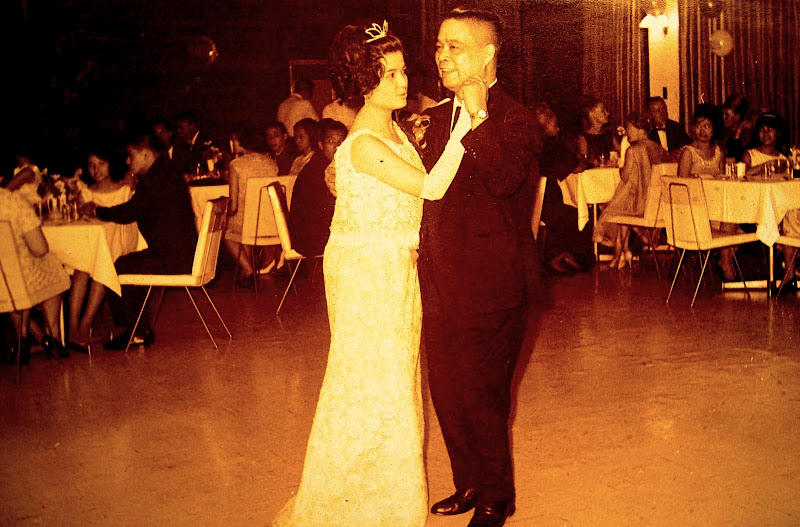
On their 18th birthday,  the parents  customarily throw a large party, complete with the Debutante’s  own hand-picked entourage of 18 individuals or multiple sets of 18. These 18 are conventionally nine males and nine females whom the celebrant pairs off into partners. The celebrant's court usually wears a uniform formal outfit chosen by the celebrant (similar to the dress of a wedding party), while the celebrant herself typically wears one or several extravagant gowns during the course of the night.

A typical ceremony begins with a short prayer invoking blessings upon the debutante. The debutante then enters, and performs traditional dances with her court for their guests. The most important one is known as the "Grand Cotillion Dance," which is usually a waltz. An "18 Roses Dance" is also done, where 18 pre-selected males who are close to the debutante dance with her after presenting her with a single red rose or her favourite flower. This dance is almost always preceded or concluded with the memorable "Father and Daughter Dance," and sometimes the father takes the place of the 18th Rose (who is often the girl's significant other). An elder male relative such as a grandfather may also take the father's place if he is unavailable for the occasion.

Aside from roses, the debutante also has 18 Candles, who are females friends or relations of the debutante. Each lady delivers a short speech about their relationship with the celebrant and/or any special greeting, and lights a candle that is either held or placed on a stand. Music and other performances are usually interspersed between the '18 items' rites, while dinner and sometimes alcohol is always served. The birthday cake ceremony often occurs, as does a fireworks display concludes for more extravagant parties. The night ends with a Debutante's Speech in which the fêted youngwoman shares her thoughts on life and extends her gratitude towards her guests.

Al Vandenberg Untitled

American photographer Al Vandenberg moved to London in the early 1960s. This untitled photo shows three youths stood next to an advert for a shop on Archway Road.


The word teenager was not really said unitl the 1950s.  This put a title on a new and upcoming age group of men and women that are no longer kids but not yet adults.  These teenagers had a new found purpose in life, and that was to enjoy their life and to be themselves.  As a youg adult in the 30s or the 40s, your were not expected to graduate high school, then go to college, then get a job but you were expected to work and provide for your family as soon as you were able to.  This was a popular male role in those days.  As a female, you were expected to be a ”house mom” and that was pretty much it. Adults in the 1950s did not want this for their children; they wanted to give them more opportunity and a richer life. With no more depression and  the rise of prosperity, adults could spend more while less responsibility and pressure was put on the teen.  With less responsibilty and more support from their parents, teens were able to do more things such as go out with their friends more often, buy food more, buy more clothes, and buy more new music.  With all this, teens also became much more independent by not asking their parents for permission to do things and just doing them with their own authority, especially if they had their own cars.  Teens began to attend dances, make hair fads, and make clothing trends. As for music, parents believed the new trend of music, rock n’ roll, was currupting their children.


Although the war made the '40s a very difficult time for teenagers, people made do with what they had. However they would be left with the memories of WWII for the rest of their lives. During the '50s, everyone was still recovering from the horrors of World War II. People from around the world idolized the Americans, who definitely prospered during this era. For teenagers, the clean-cut "college" look was back in style. Girls often wore full skirts with bobby socks and saddle shoes, and their hair was usually in ponytails or softly curled. Beehives came into style in the late years of the decade As the '50s progressed trends started to imitate cover model, Marilyn Munroe, and young women turned to clothes that showed off their figures. Although boys' appearance began as rigidly clean-cut, it slowly changed. Teenage boys either had short crew cuts or their hair was on the slightly longer side. These young men started dressing as "bikers" or "greasers," and many imitated the popular Elvis Presley.


LIFE AT AN OHIO PROM THAT KEPT GOING, AND GOING, AND GOING ... Mariemont High School's 1958 prom.


Automobiles provided an excellent forum for sexual experimentation in the fifties. They provided the right amount of privacy for just that kind of "exploration," better known as "parking." Adults knew that "parking" happened, so instead of trying to stop the practice, which would be near impossible, they tried to contain it. For example, a police chief in New Jersey set up system where cars could park at night in county parks while patrol cars watched over them; however, the system required that the cars keep their lights on and must be parked legally. The goal of this system, which is similar to many others implemented throughout the nation, is not to control sex itself but to make it difficult for sex to occur. It manipulated times and locations so that sex was nearly impossible to happen.


During the 1950s, youth became more self-aware, and they were determined to create their own styles, which the designers followed. Throughout the decade, the teenagers became a distinct group of society, which had never been done before. Young people gained much freedom, which was attributed by some to the lack of discipline after the war and the invention of Rock'n'Roll. However with this newborn freedom also came an increase in racism, and some youth gangs appeared.

One type of music known as Rock'n'Roll greatly influenced the teens of the '50s. Saturday nights were spent at local dances where teens jived to their favourite music. Youth could also "hang out" at coffee bars or diners and listen to jukeboxes while they smoked cigarettes. Although nicotine was a very popular drug used, the other drugs that teens use now were not as prevalent in the '50s.

The '60s marked an era of teenagers, as they truly became a distinct part of North American culture. The first baby-boomers were just growing up and developing into young men and women. As this was a time of prosperity and production for North America, teens received more money and had an easy time finding jobs.
Since teens had more money to spend, more and more products were being designed specifically for them, notably clothing. Designers began to market items directly to youth, and small boutiques that sold these young and modern fashions opened up everywhere.

For girls miniskirts and tights were extremely popular, accompanied by a skimpy or see-through blouse and long loose hair. It was during this decade that the young and ultra-skinny look first made headway.

For boys, the Beatles look was very popular, and their clothes were often very colourful. Many hippies wore tie-dyed t-shirts and bell bottoms. These bright and bold outfits were seen as very daring for young men to wear as opposed to previous generations. Denim jeans also became the most worn type of pants during the '60s, and Levi's was thought of as the best brand. Common practice for teens to buy jeans too big for them and wear them in the bath to shrink them down to the "perfect fit."

Although the horrors of WWII were somewhat in the past, teens were often still very pacifist during the '60s. The protested against the war in Vietnam, and the immediate fear of nuclear war gave them even more reason to despise war. This threat of world demolition also gave youth the opportunity to enjoy their lives immediately, experiencing as much as possible, even if it had been seen as inappropriate in the past.

The '70s proved to be a drastic change in thoughts and beliefs of teenagers from the '60s. Many young people held pessimistic views of the world, and they felt very uncertain about what the future would hold.

Many people have speculated that this complete change in youthism resulted in the outrageous fashions during this time. The unisex look was in trés chic with denim becoming the most common teenage apparel. Large boots and platform shoes complemented the look, and many young women combined this footwear with hot pants and a crop top. Flared trousers were also very popular, and military colours also influenced some of the "camouflage clothes" worn by youth.

Probably the most noticeable change in fashion was the creation of the punk movement. This style was heavily influenced by musicians of this era, including the Sex Pistols and the Ramones. The glamorous clothing consisted of lots of glitter and colourful materials. Movies and television shows also had a great impact on the styles of the youth in the '70s. Saturday Night Fever made disco very popular and many teens copied the disco attire worn by John Travolta in the famous movie.

Teenyboppers, or young fans, were also an invention of the '70s. As young male stars, such as David Cassidy, were becoming more and more prevalent, these younger fans had role models who were just a few years older than themselves.


Captured: Vietnam and the 35th Anniversary of the Fall of Saigon


Mary Ann Vecchio gestures and screams as she kneels by the body of a student lying face down on the campus of Kent State University, Kent, Ohio on May 4, 1970. National Guardsmen had fired into a crowd of demonstrators, killing four. (AP Photo/John Filo)


Captured: Vietnam and the 35th Anniversary of the Fall of Saigon


The Youth in the 1960s made a cultural phenomenon that developed first in the United States and United Kingdom and spread throughout much of the Western world between the early 1960s and the early 1970s. The movement gained momentum during the U.S. government's extensive military intervention in Vietnam. At the same time, there was rising engagement in the African-American Civil Rights Movement, with important actions and protests taking place across the South in the 1960s, some with participation by students and activists from the North.

File:The Fabs.JPG


File:Pentagon vietnam protests.jpg

As the 1960s progressed, widespread tensions developed in US society that tended to flow along generational lines regarding the war in Vietnam, race relations, human sexuality, women's rights, traditional modes of authority, experimentation with psychoactive drugs, and differing interpretations of the American Dream. New cultural forms emerged, including the pop music of the British band the Beatles and the concurrent rise of hippie culture, which led to the rapid evolution of a youth subculture that emphasized change and experimentation. In addition to the Beatles, many songwriters, singers and musical groups from the United Kingdom and the US came to impact the counterculture movement.

Back in the fifties, it was pretty much understood that boys pay for the expenses of the date. They take their girls out and show them a good time, but all of this costs money. Girls were, and some would insist still are, expensive to please especially if one takes them out frequently. The concept of Dutch dating was not acceptable back in the fifties. Both boys and girls were embarrassed by the idea. It was suggested that if a young man needed help paying for the date then the girl should give him some money before the date so the boy can still look like he paid for the meal and entertainment. This method was suggested but rarely ever practiced. Of course, today Dutch dating is quite normal. 


Teenagers in the 1950's are so iconic that, for some, they represent the last generation of innocence before it is "lost" in the sixties. When asked to imagine this lost group, images of bobbysoxers, letterman jackets, malt shops and sock hops come instantly to mind. Images like these are so classic, they, for a number of people, are "as American as apple pie." They are produced and perpetuated by the media, through films like Grease and Pleasantville and television shows like Happy Days, The Donna Reed Show, and Leave It to Beaver. Because of these entertainment forums, these images will continue to be a pop cultural symbol of the 1950's. After the second World War, teenagers became much more noticeable in America. Their presence and existence became readily more apparent because they were granted more freedom than previous generations ever were.

File:Elvis Presley promoting Jailhouse Rock.jpg

Two debutantes making their debut at cotillion at the Waldorf Astoria Hotel, New York.


The subculture is exclusive to young girls. As a subculture, it is a "retreat and preparation", allowing girls to relate to their peers and "practice in the secrecy of girl culture the rituals of courtship away from the eye of male ridicule", also having no risks of standing out or personal humiliation, and serving as a retreat to avoid being labeled sexually. It also allows young girls to participate in semi-masturbatory rituals, since they don't have access to the masturbatory rituals common among boys. While the subculture allows them to have a space of their own, the subculture magazines offer an idealized relation with the teen idols, always implying a subordination of the female to the male, anticipating that the subordination will keep being present in their future relationships, and presenting an idealized form of marriage.

The narrative fantasies elaborated around teenyboppers serve as distractions from boring, unrewarding, or demanding aspects of life, such as school or work, and as a defensive means against the authoritarian structures at school. When shared with other teenyboppers, it allows for defensive solidarity. It allows its members to define themselves apart from younger and older girls. Their groups, like all girl groups, will rarely go above four, unlike boys, who prefer bigger numbers. It has a commercial origin and is "an almost packaged cultural commodity", emerging from the pop business and relying on commercial magazines and TV. As a result, it has fewer creative elements than other subcultures. Membership has very few restrictions, does not require elaborate spending, and requires much less competence and money than certain school activities. Due to its female members not having as much freedom as their male counterparts, the subculture is suited so that it can be followed at school or home, and a party can be made with just a bedroom, a music player and permission to invite friends.


In the Philippines, proms are popular in high schools. Prom usually takes place in the junior and senior years of high school, which is normally around February or March. Proms are commonly known as “JS Prom”, or, junior–senior prom. The associated student body generally organizes the event. Usually a prom king and queen are chosen. The basis for the king and queen judgment is the beauty, the fashion of the nominee, and the popularity.   


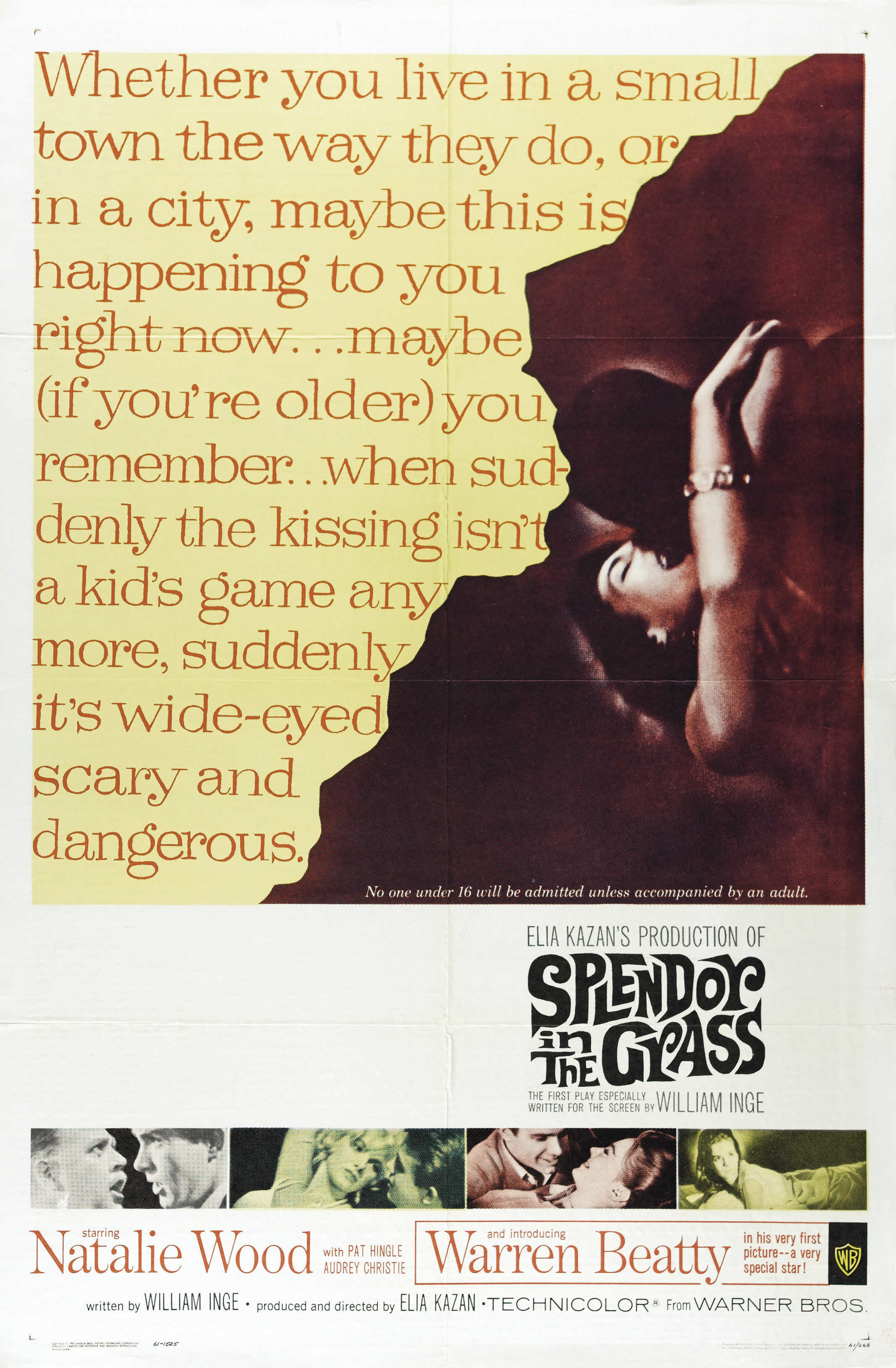
Natalie Wood and Warren Beatty, 1961.

File:Splendor Sheet A.jpg
Splendour in the Grass by William Wordsworth
What though the radiance
which was once so bright
Be now for ever taken from my sight,
Though nothing can bring back the hour
Of splendour in the grass,
of glory in the flower,
We will grieve not, rather find
Strength in what remains behind;
In the primal sympathy
Which having been must ever be;
In the soothing thoughts that spring
Out of human suffering;
In the faith that looks through death,
In years that bring the philosophic mind.
 
'WEST SIDE STORY': PHOTOS FROM THE SET OF A HOLLYWOOD CLASSIC

"Sharks, bedeviled by the tormenting of the Jets, cook up some dirty tricks. Here they pour yellow paint down on a quartet of dejected Jets. Both gangs are itching for a fight


Lutz Dille, Untitled, 1962

1962. The photographer snaps two young men in another example of the street photography exemplified by the Tate Britain exhibition